Buying guide
How to Choose Dorm Room Essentials Without Overbuying
A room-first checklist for choosing dorm essentials by space, noise, outlets, upkeep, portability, and residence-hall rules.
Editorial buying guide · Updated · ByDorm Room Compass Editorial Team ·Editorial policy ·Methodology

Start with the room, not a viral packing list
A useful dorm purchase solves a problem in the room you actually have. A generic checklist cannot know the window direction, outlet placement, roommate schedule, building ventilation, permitted appliances, storage, or shared items already available. Buying before those constraints are known is how a “must-have” becomes unopened clutter.
Use this guide in two passes. Before move-in, verify policy and pack only low-risk essentials. After move-in, observe the room for several days and name the problem precisely: direct sunlight at 6 a.m., weak airflow at a lofted bed, an odor source that needs reporting, or no permitted hot-water access. Then choose the smallest intervention that fits.
The seven-question dorm buying filter
1. What exact problem will this product solve?
Avoid broad labels such as “comfort” or “wellness.” Write a sentence that describes the job: “move air across my desk,” “block hallway light from my eyes,” “filter airborne particles near my sleeping area,” or “heat several cups of water where the housing policy permits it.” If the sentence is vague, the purchase is not ready.
This distinction prevents category confusion. A fan creates direct airflow; a purifier moves air through a filter; a sleep mask blocks light; a kettle heats water. More features do not make these jobs interchangeable.
2. Is the product allowed in this building and room?
Residence-hall policies vary. Official university pages show that appliances may be allowed, restricted to kitchen areas, limited by safety features, or prohibited in sleeping rooms. Policies can also address extension cords, power strips, heating elements, window equipment, and placement.
Read the current rule for your institution and building. When a policy says “approved appliances” without naming the item, ask housing staff and include the appliance type and wattage. A merchant label such as “dorm essential” is marketing, not authorization.
3. Where will it live?
Measure the surface, not just the floor. Include clearance for air intake, fan rotation, opening a lid, removing a filter, or clipping a device. Check whether the power cord crosses a walkway, bedding, or a roommate’s area. A product that fits by dimensions can still be unusable if its moving parts or maintenance access are blocked.
For the AROEVE MK06, the manufacturer lists a 6.1-inch-square footprint and 9.6-inch height. That is compact, but it still needs unobstructed airflow. The Koonie fan needs a stable desk or clamp point. The Chefman kettle needs an approved, level surface away from clutter. The MyHalos mask needs only personal storage and a place to air dry after washing.
4. What routine does it add?
Every product has an operating cost measured in time, attention, or replacement supplies. The AROEVE purifier needs filter replacement; the official page recommends every three to six months. The Koonie fan needs charging, and its mist tank adds filling and cleaning if used. MyHalos instructs hand washing and air drying. The Chefman kettle needs emptying, descaling, and safe storage.
Ask who will perform that routine and where. If the answer is “probably later,” prefer a simpler format or skip the purchase.
5. Will it affect a roommate?
Noise, light, fragrance, moving air, water mist, heat, and shared outlets are social constraints. A quiet-mode claim does not guarantee that a roommate will welcome continuous motor noise. Aromatherapy should never be assumed acceptable. Direct fan airflow may cross another person’s bed. A kettle occupies shared surface and electrical capacity.
Discuss the setup before buying. A product that creates conflict is not a successful dorm solution even when it performs its listed function.
6. What changes after the first purchase?
Current price is only one part of cost. Purifier filters recur. Rechargeable batteries age. A sleep mask may need replacement as materials wear. Kettles can accumulate mineral scale. Check replacement availability, cleaning instructions, and return terms on the current listing.
Do not copy a price into a long-term plan from an editorial page. Merchant price, stock, seller, promotions, delivery, and return terms can change. Use those dynamic details only at the final buying step.
7. What is the no-buy alternative?
A good buying guide should make skipping a product possible. Report a ventilation, moisture, heat, or electrical issue to residence staff when it is a building problem. Use existing blinds or agreed room-darkening options before buying a mask. Reposition a desk before adding a fan. Use a permitted common kitchen instead of an in-room kettle.
If a no-buy action solves the problem, that is a better outcome than adding another item to a small room.
Choose by dorm problem
For direct airflow near a bed or desk
Start with a personal fan. A rechargeable clip-and-desk format such as the Koonie can be useful when the outlet or surface layout is awkward. Verify where it will attach, how it will charge, and whether indoor mist is appropriate around electronics and bedding. Do not expect an 8-inch fan to cool the entire room.
For particle filtration
Start with a portable air purifier whose room-size information and maintenance path you understand. EPA guidance recommends considering room size and CADR and notes that no air cleaner removes all pollutants. The collected MK06 evidence includes compact dimensions and manufacturer claims but not an independently verified CADR, so precise performance should not be assumed.
For unwanted light
A sleep mask is a small, portable response when ambient light cannot otherwise be avoided. The MyHalos format uses contoured eye cups and an adjustable strap. Fit is personal, and the mask will not address noise, temperature, stress, or an insufficient sleep schedule.
For hot water
Check policy first. If an automatic-shutoff kettle is explicitly permitted, compare capacity, wattage, safety features, surface space, and cleaning. The Chefman model here is 1.8 liters and 1500 watts. Those specifications may be excessive for one person’s occasional cup even where the appliance is allowed.
A practical move-in sequence
Before move-in, save the housing policy, coordinate shared items, and measure known furniture if dimensions are provided. Pack low-risk personal items. Do not buy powered comfort devices solely because they appear on a general college checklist.
During the first week, observe light, airflow, noise, outlet access, and shared routines. Write down repeated problems rather than one unusual afternoon. Ask residence staff about building issues and unclear appliance rules.
After the room is understood, compare one product category at a time. Read the relevant Review or Compare page, confirm the exact model and current merchant terms, and order only when the placement and upkeep plan are clear.
Our evidence boundary
This guide combines official product information, exact merchant identities, EPA air-cleaner guidance, CDC sleep-environment guidance, and official university housing policies. We did not conduct hands-on product tests. Manufacturer and merchant claims stay attributed, general guidance is not converted into a product-specific promise, and no single university policy is presented as universal.
The goal is not to finish a shopping list. It is to make each purchase earn its limited space.
Product-selection path
Products referenced in this guide
A student who wants a compact particle-filtration device for a small personal space and is willing to replace filters on schedule.
- Best for
- A student who wants a compact particle-filtration device for a small personal space and is willing to replace filters on schedule.
- Before buying
- Confirm the current listing details.
Skip if: You need independently verified CADR for exact room sizing, want cooling airflow, or cannot accommodate recurring filter replacements.
What to verify before buying
Product listings can change. Check the exact variant, size, ingredient or material information, directions, warnings, seller, return terms and current availability before buying.
Last checked: 2026-08-31. This page does not present hands-on product testing.
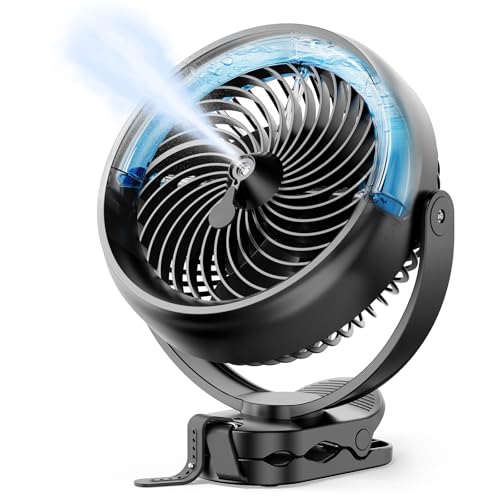
A student who needs personal airflow where an outlet is inconvenient and has a stable, spill-conscious place to use the fan.
- Best for
- A student who needs personal airflow where an outlet is inconvenient and has a stable, spill-conscious place to use the fan.
- Before buying
- Confirm the current listing details.
Skip if: You want whole-room cooling, dislike charging and tank cleaning, or your indoor setup makes mist impractical.
What to verify before buying
Product listings can change. Check the exact variant, size, ingredient or material information, directions, warnings, seller, return terms and current availability before buying.
Last checked: 2026-08-31. This page does not present hands-on product testing.

A student whose main sleep-environment problem is light from a roommate, hallway, window, or early schedule mismatch.
- Best for
- A student whose main sleep-environment problem is light from a roommate, hallway, window, or early schedule mismatch.
- Before buying
- Confirm the current listing details.
Skip if: You are sensitive to head straps, need a machine-washable item, or expect a mask to solve noise, temperature, or broader sleep problems.
What to verify before buying
Product listings can change. Check the exact variant, size, ingredient or material information, directions, warnings, seller, return terms and current availability before buying.
Last checked: 2026-08-31. This page does not present hands-on product testing.

A student in housing that explicitly permits automatic-shutoff kettles and who wants enough capacity for several cups at once.
- Best for
- A student in housing that explicitly permits automatic-shutoff kettles and who wants enough capacity for several cups at once.
- Before buying
- Confirm the current listing details.
Skip if: Your residence bans in-room kettles, limits high-wattage appliances, or you would prefer a smaller personal capacity.
What to verify before buying
Product listings can change. Check the exact variant, size, ingredient or material information, directions, warnings, seller, return terms and current availability before buying.
Last checked: 2026-08-31. This page does not present hands-on product testing.
Approved sources
FAQ
What should I buy first for a dorm room?
Start with a problem you have confirmed in the actual room, then choose the smallest product that solves it without conflicting with housing rules or your roommate's needs.
Are electric kettles allowed in dorm rooms?
Rules vary by institution, building, and room type. Check the current written policy and ask housing staff when the wording is unclear.
Should I buy a fan or an air purifier?
Choose a fan for direct personal airflow and a purifier for particle filtration. Neither is a universal fix for building ventilation or temperature problems.